
Automated detection. Accountable decisions.
Road intelligence and officer efficiency, working as one.
UTURN helps enforcement teams move from a possible roadside violation to a complete, reviewable case with less repetitive work. AI helps surface and organize relevant events while trained authorized people make the verification decisions that matter.
UTURN camera enforcement
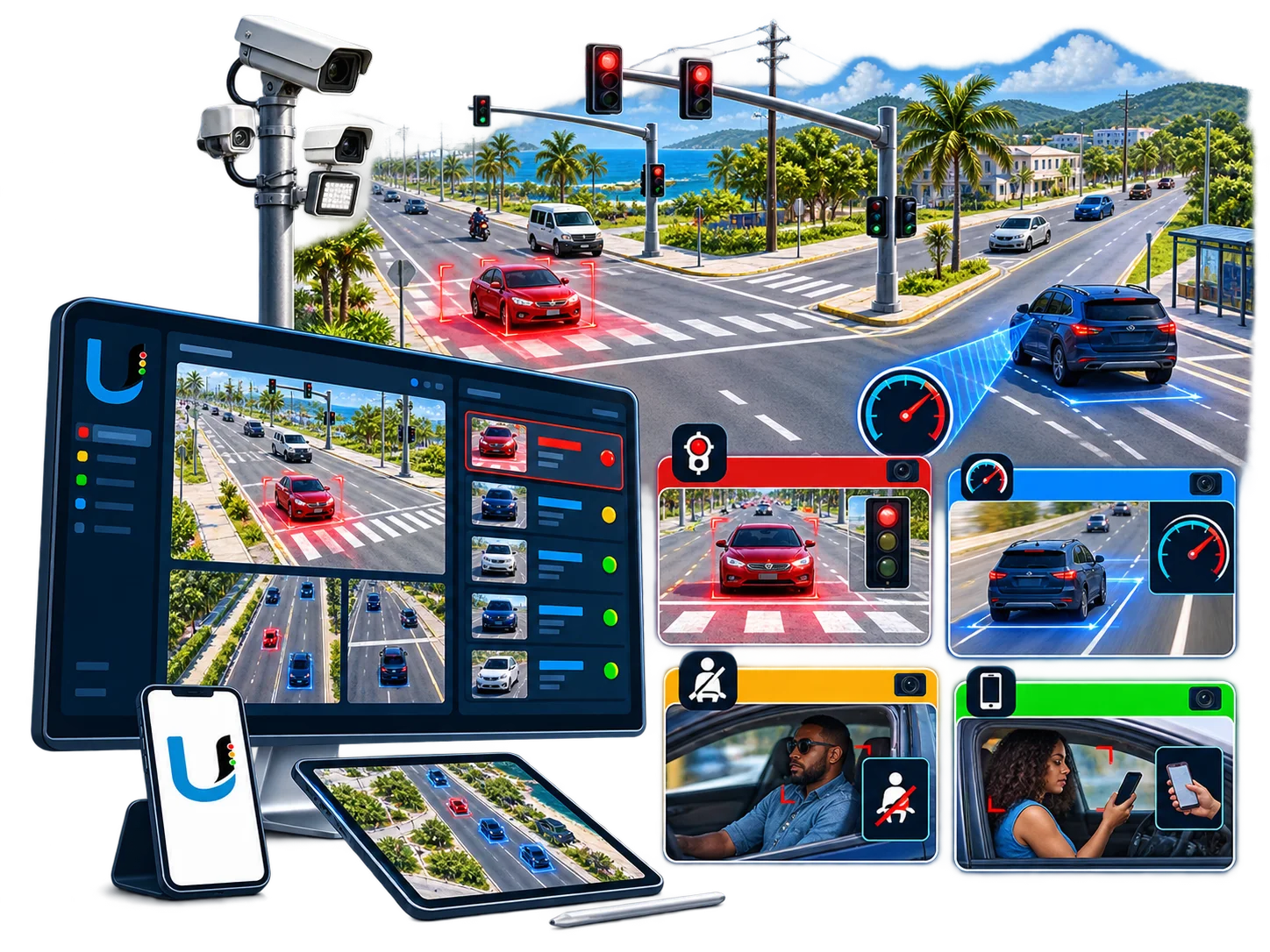
Monitor the violations that put road users at risk.
Purpose-selected cameras and sensing equipment monitor configured locations and create structured events for review. Each deployment is designed around the roadway, approved rules and evidence requirements.
- Red-light and stop-line enforcement
- Spot-speed monitoring at approved locations
- Seat-belt compliance detection
- Handheld mobile-phone-use detection
AI-assisted, human verified
Let AI handle the heavy lifting while people retain control.
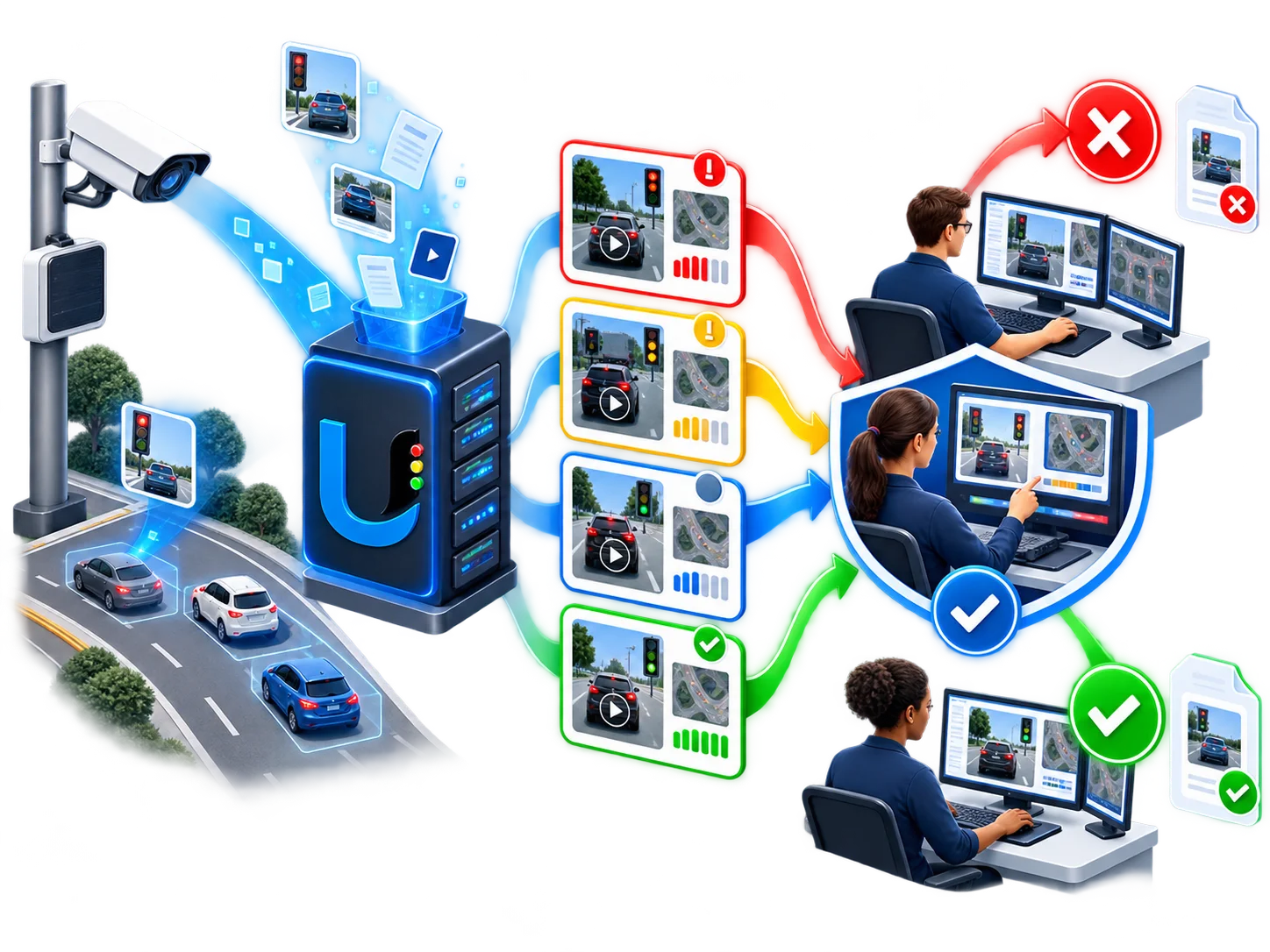
AI-assisted analysis identifies possible violations, extracts relevant event information and organizes evidence for review. Trained authorized personnel then verify the event against the approved criteria before it can proceed.
- Prioritized queues for possible violations
- Consistent presentation of images, video and event context
- Human approval, rejection and escalation decisions
- Traceable review actions and case history
Roadside enforcement
From a slow paper process to a guided digital workflow.
Rugged handheld units and dependable mobile printers put the required workflow in the officer's hands. Structured steps, reusable information and validation reduce manual effort so a ticket that once took minutes can be issued in seconds.
Rugged handheld units
Field-ready devices support reliable data entry, lookup, evidence capture and guided enforcement workflows at the roadside.
Dependable mobile printing
Rugged mobile printers provide clear, immediate documents while supporting the pace and handling demands of field operations.
Faster, cleaner issuance
Validated fields and a consistent digital sequence reduce duplication, improve completeness and move officers through issuance in seconds.
One accountable path from detection to action.
- DetectCapture a possible violation and the supporting roadside event data.
- PrepareUse AI to identify relevant details and assemble the review package.
- VerifyHave trained authorized personnel accept, reject or escalate the case.
- ProceedMove verified cases through the approved notice, ticket or downstream process.
Complete enforcement capability
Built for evidence, accountability and operational control.
Event intelligence
Bring detection details, media and device context into one organized case view.
Human review
Give authorized reviewers clear evidence and defined decisions at every verification stage.
Secure evidence
Protect case information with controlled access, review states and traceable activity.
Rules and queues
Configure violation types, review priorities, exceptions and escalation paths around the approved operation.
Reporting
Understand detection volumes, review outcomes, processing activity and operational performance.
System integration
Connect approved vehicle, licensing, case, payment, court or reporting systems where compatible.
Focused road-safety applications
Apply the right enforcement model to the right environment.
Configured around the approved enforcement operation.
- DiscoverMap locations, violation types, evidence rules, users, integrations and field conditions.
- DesignConfirm camera, sensing, handheld, printer and workflow requirements.
- ValidateTest detection, evidence, human review and downstream processes before launch.
- SupportTrain teams, monitor performance and refine the operation as approved needs evolve.
Frequently asked questions
UTURN law enforcement, clearly explained.
What is the UTURN automated law-enforcement solution?+
UTURN connects roadside cameras, AI-assisted event analysis, human verification, evidence workflows and officer tools in one coordinated enforcement environment. It is designed to reduce repetitive work while preserving accountable human review.
Which road-safety violations can the camera system support?+
Configured deployments can support red-light enforcement, spot-speed enforcement, seat-belt monitoring and mobile-phone-use detection. Final scope depends on the approved rules, equipment, roadway design and operating requirements.
Does AI issue tickets automatically?+
No. AI performs the heavy-lifting tasks of identifying possible events, organizing relevant evidence and prioritizing review. Trained authorized personnel verify each enforcement case before it proceeds through the approved workflow.
How does red-light enforcement work?+
Cameras and configured detection rules identify a possible stop-line or signal violation and assemble the relevant images, timing and event context for authorized human review.
How does spot-speed enforcement work?+
Approved sensing and camera equipment identify a possible speeding event at a monitored location. The system associates the reading and supporting evidence with the event for verification.
Can the system detect seat-belt and mobile-phone use?+
Where suitable cameras and configurations are deployed, AI-assisted analysis can flag possible seat-belt and handheld-phone violations for trained human verification.
What is included in an enforcement evidence package?+
A configured package can bring together event images or video, time, location, vehicle information, the suspected violation, device data, review actions and case history. Exact contents follow the approved operating and legal requirements.
How do roadside officers issue tickets faster?+
Rugged handheld units guide the officer through a structured digital workflow and connect with dependable mobile printers. Reusable information, validation and a clear sequence reduce manual entry so issuance can take seconds instead of minutes.
Are the handheld units and printers designed for field use?+
Yes. Cherami can provide rugged handheld units and mobile printers selected for roadside conditions, frequent handling and dependable daily operation. The final equipment specification is confirmed for the deployment environment.
Can UTURN integrate with existing systems?+
Where approved and technically compatible, UTURN can connect with vehicle, licensing, case, payment, court, identity or reporting systems through supported interfaces. Integration scope is confirmed during discovery and technical design.
How are access, accountability and audit history managed?+
Role-based access, review states, timestamps and activity history can be configured so authorized teams can trace how an event moved from detection through verification and onward action.
How does Cherami implement and support the solution?+
Cherami begins with roadway and workflow discovery, then confirms equipment, evidence, integrations, roles and review rules. The solution is configured, tested and validated before users are trained and the service is launched with ongoing support.