
Inventory intelligence for everyday operations
A dependable view from receipt to delivery.
Cherami configures inventory management around the way goods actually enter, move through and leave the organization. Teams gain clearer quantities, locations, priorities and history without adding unnecessary complexity.
Connected warehouse operations
Give every stock movement a clear next step.
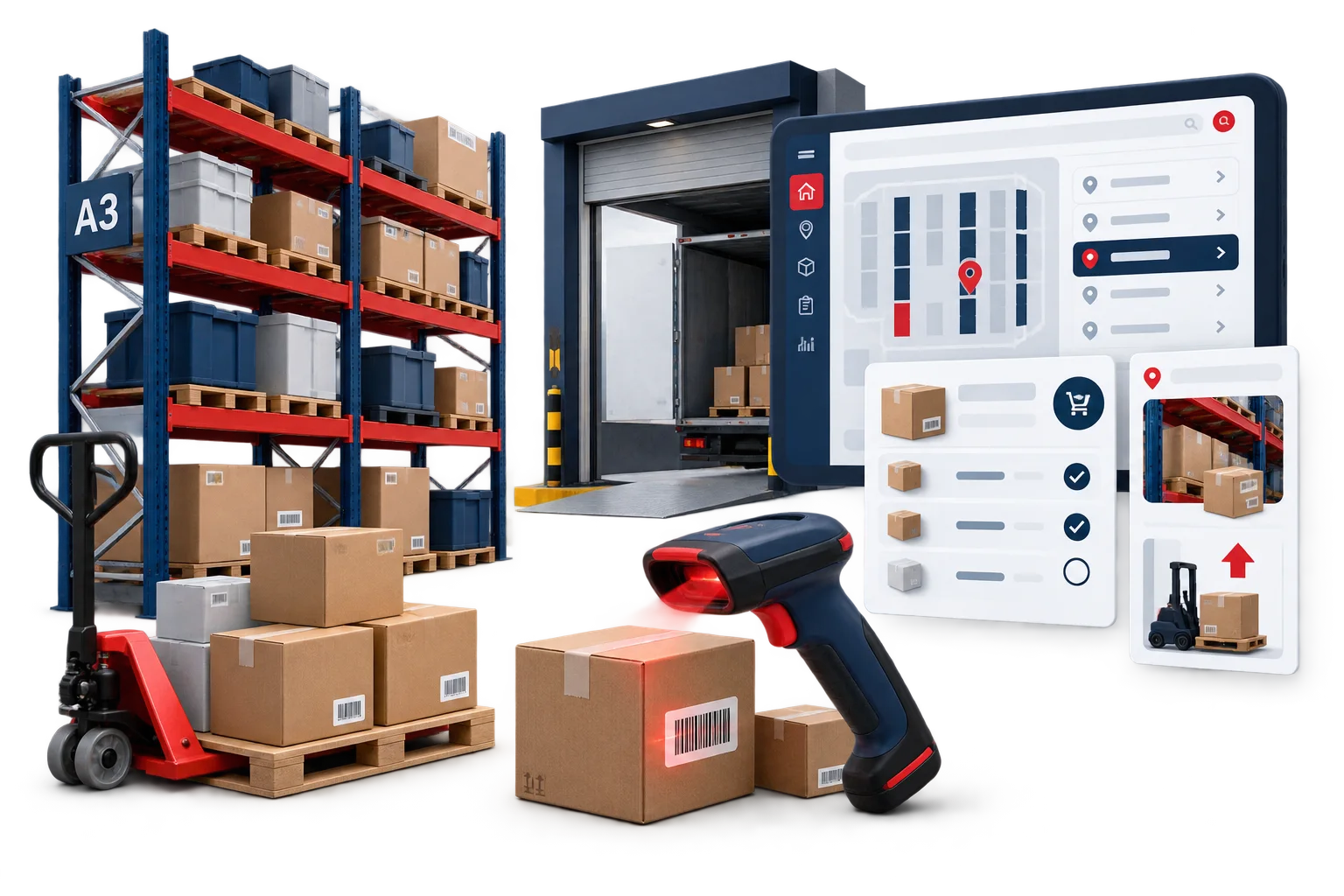
Coordinate receipts, internal transfers, fulfilment, returns and adjustments from one structured workspace. Barcode-ready workflows reduce repetitive entry and help teams update inventory as work happens.
- Multi-warehouse, zone, aisle, shelf and bin locations
- Barcode-supported receipts, picks, transfers and counts
- Single, batch, cluster or wave picking where appropriate
- Returns, scrap and inventory-adjustment workflows
Complete operational capability
Practical control across the inventory lifecycle.
Replenishment
Use minimum and maximum rules, lead times and forecasts to surface purchasing or transfer needs.
Traceability
Follow suitable products by lot or serial number from receipt through movement and delivery.
Storage rules
Direct items to suitable locations based on product needs, capacity and picking access.
Availability
Review on-hand, incoming, outgoing and reserved quantities across configured locations.
Counts and audits
Schedule cycle counts, approve adjustments and maintain a traceable record of stock changes.
Reporting and integration
Connect compatible purchasing, sales, accounting, shipping, hardware or third-party systems.
Built around real operating needs
Configured for the stock operation you actually run.
Start with control, then add the capability that earns its place.
- DiscoverMap products, locations, movements, roles and the decisions that cause delay or uncertainty.
- ConfigureSet practical workflows, permissions, replenishment rules, barcodes and reports.
- ValidateTest real receiving, picking, transfers, counts, returns and exception scenarios.
- ImproveTrain teams, review adoption and refine the operation as requirements evolve.
Frequently asked questions
Inventory Management, clearly explained.
Can Cherami manage inventory across more than one location?+
Yes. The solution can maintain stock across multiple warehouses, stores, rooms and configured storage locations, including transfers between them.
Can users process inventory with barcode scanners?+
Yes. Compatible barcode devices can support receipts, picking, transfers, counts and adjustments. Hardware and barcode standards are confirmed during solution design.
How does replenishment work?+
Minimum and maximum quantities, lead times, current demand and forecast information can be used to identify purchasing, transfer or other replenishment needs. Rules are configured around the client’s approved process.
Can we track lots, serial numbers and expiration dates?+
Yes. Suitable products can be traced by lot or serial number, with expiration information and removal priorities configured where required.
Does the system support receiving, picking, packing and returns?+
Yes. Cherami can configure structured workflows for receiving, putaway, picking, packing, delivery, returns, scrap and adjustments.
Can it support cycle counts and stock audits?+
Yes. Teams can schedule counts by product or location, record adjustments and maintain an activity history for review and approval.
Can it help us understand stock that is not moving?+
Reports can present stock age, location, quantities and movement history so authorized teams can identify slow-moving, excess or potentially obsolete items.
Can inventory connect with purchasing, sales and accounting?+
Where compatible interfaces are available, Cherami can connect inventory with approved purchasing, sales, accounting, shipping, hardware and third-party services.
Is every organization required to use every feature?+
No. Cherami selects and configures only the capabilities justified by the client’s operation, controls and budget.
How is the solution implemented?+
Cherami maps the current operation, cleans and prepares required data, configures workflows and access, tests realistic scenarios, trains users and supports launch.